View detail ↗A working canvas, from the first question to connected artifacts.
My role
Founder & product designer
Scope
Product strategy, interaction design & design system
Project
Independent · Web Ongoing
Stage
Preparing for closed beta
Project context
An answer is part of a longer task.
An AI response often becomes something else: a draft to edit, an option to compare or a decision to revisit. The context includes the material that informed it—and the discussion that follows.
I built Jarwiz to keep that work together. It combines a spatial canvas with editable documents, tables, diagrams and working prototypes. Bring in project material, ask a question and keep developing the result.
The challenge was bigger than generating good cards. How could different kinds of work feel like one understandable system?
The model behind the workspaceOne continuous loop
01
Bring context
Files, references and existing work
→
02
Make it useful
Documents, tables, diagrams and prototypes
→
03
Work through it
Inspect, discuss and choose changes
→
04
Keep building
Edit the result. Ask the next question.
← The work becomes context for what comes next.
Final artifacts
A workspace you can keep building on.
One interaction model, expressed through different kinds of work. These recordings show the product’s real components with illustrative projects, prepared AI responses and source snapshots.
01 / Start
A question. Your material. A canvas with somewhere to go.
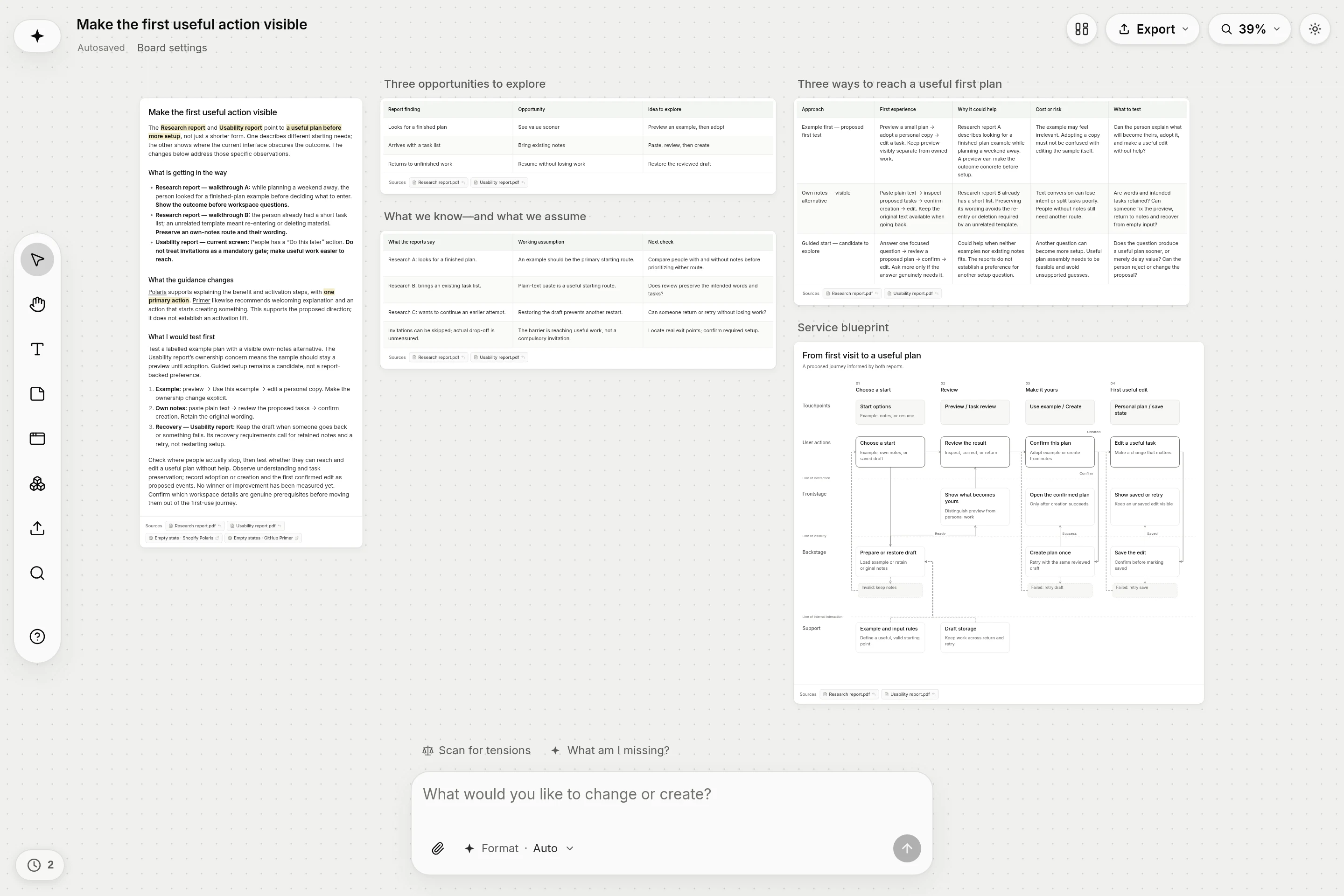
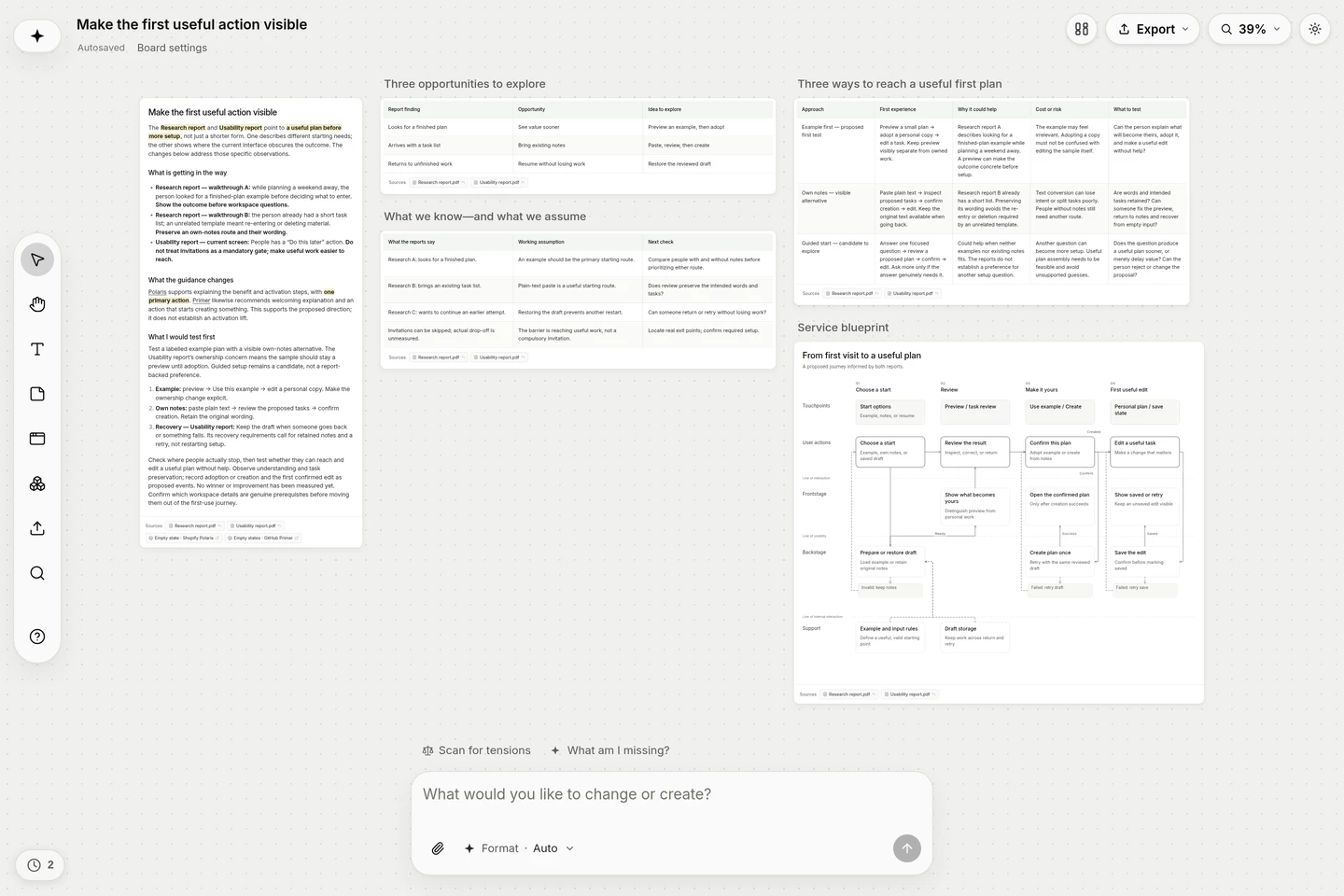
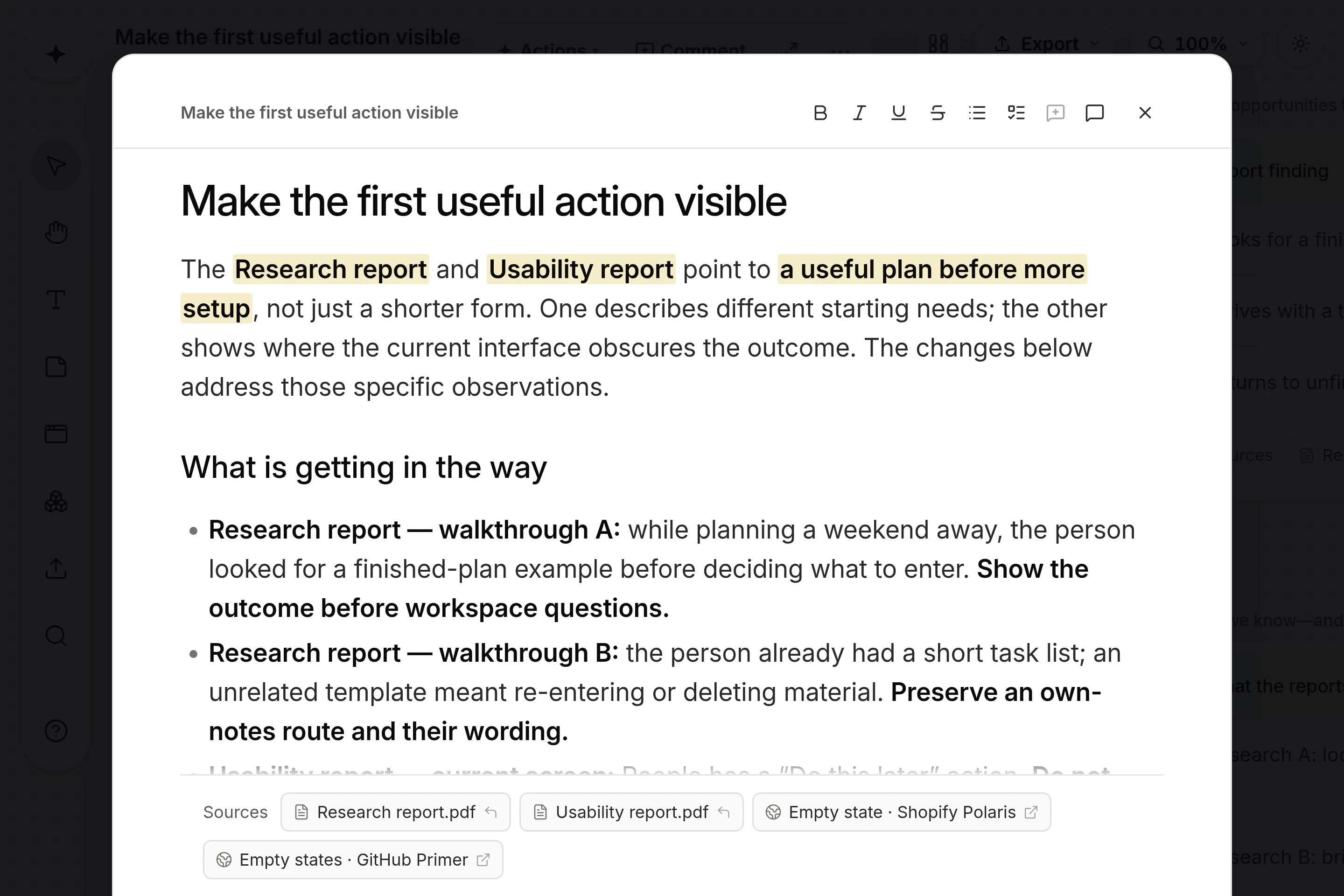
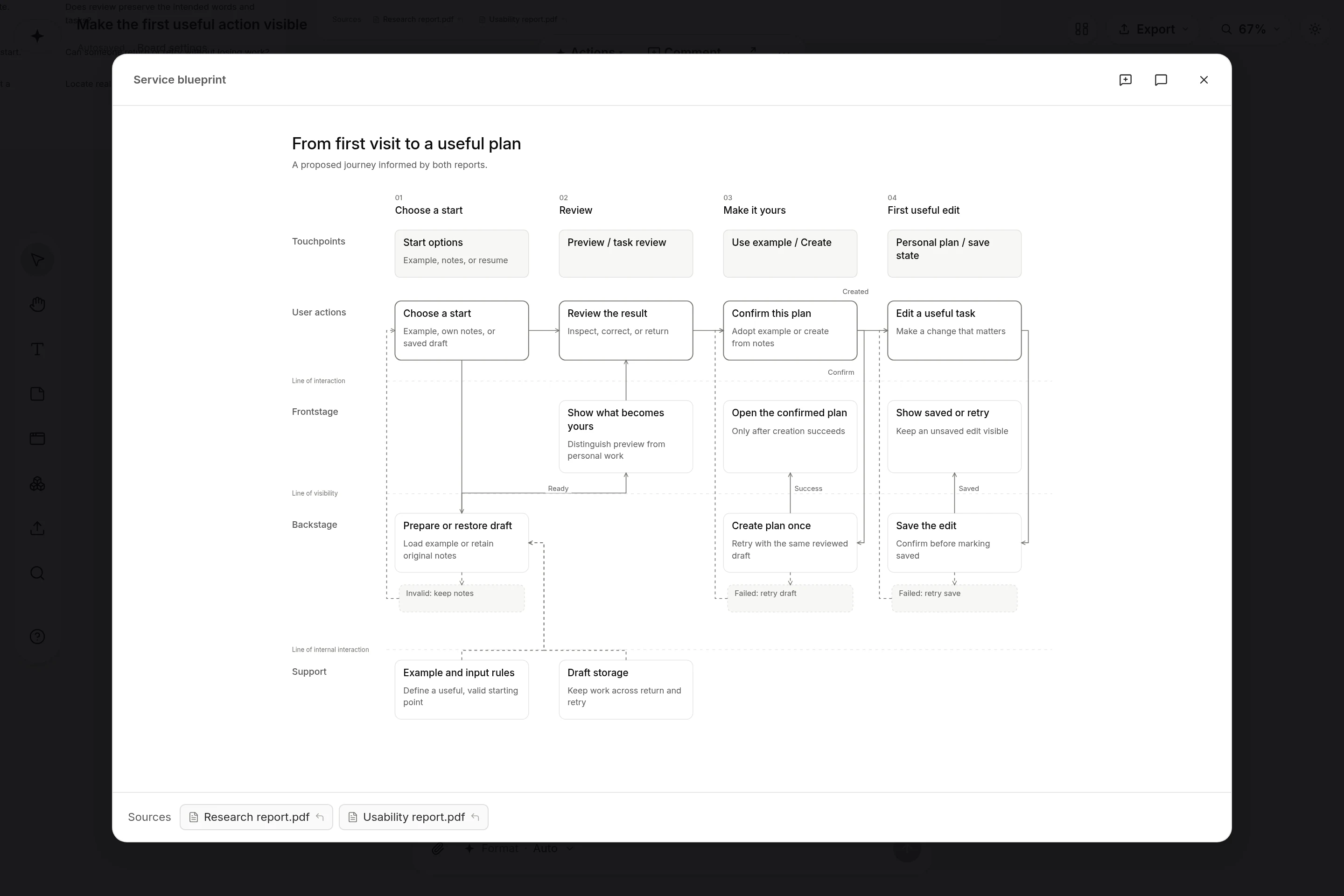
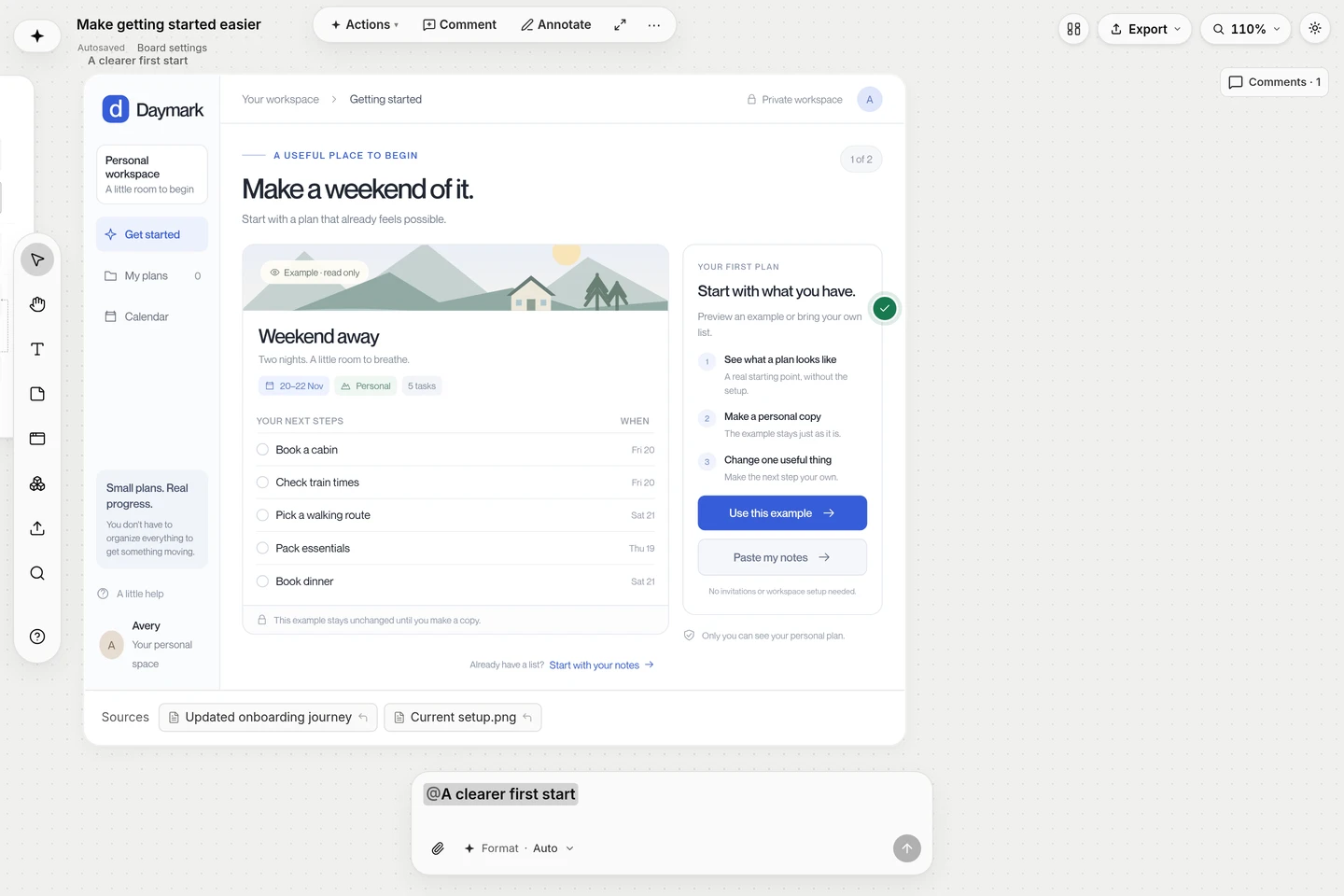
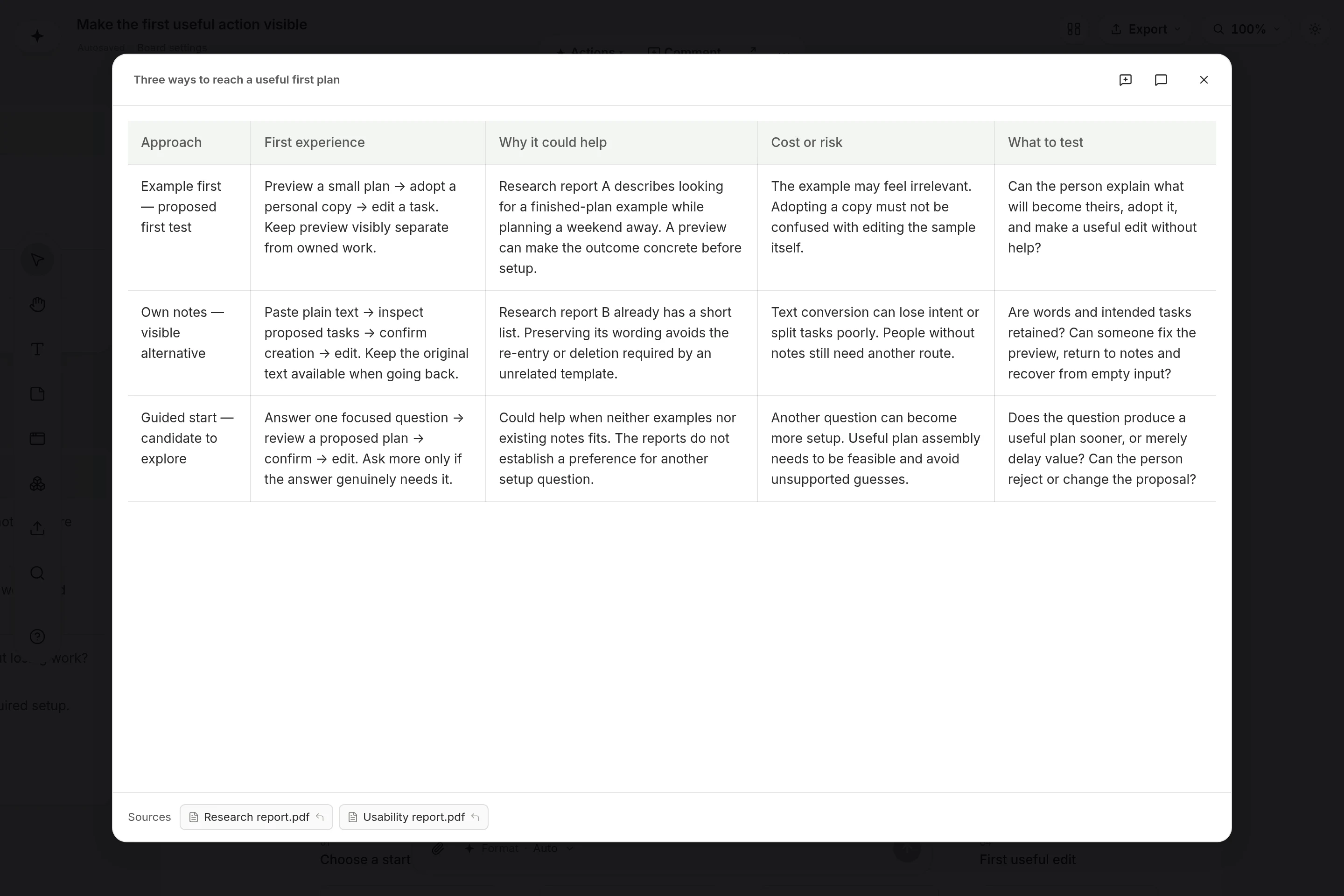
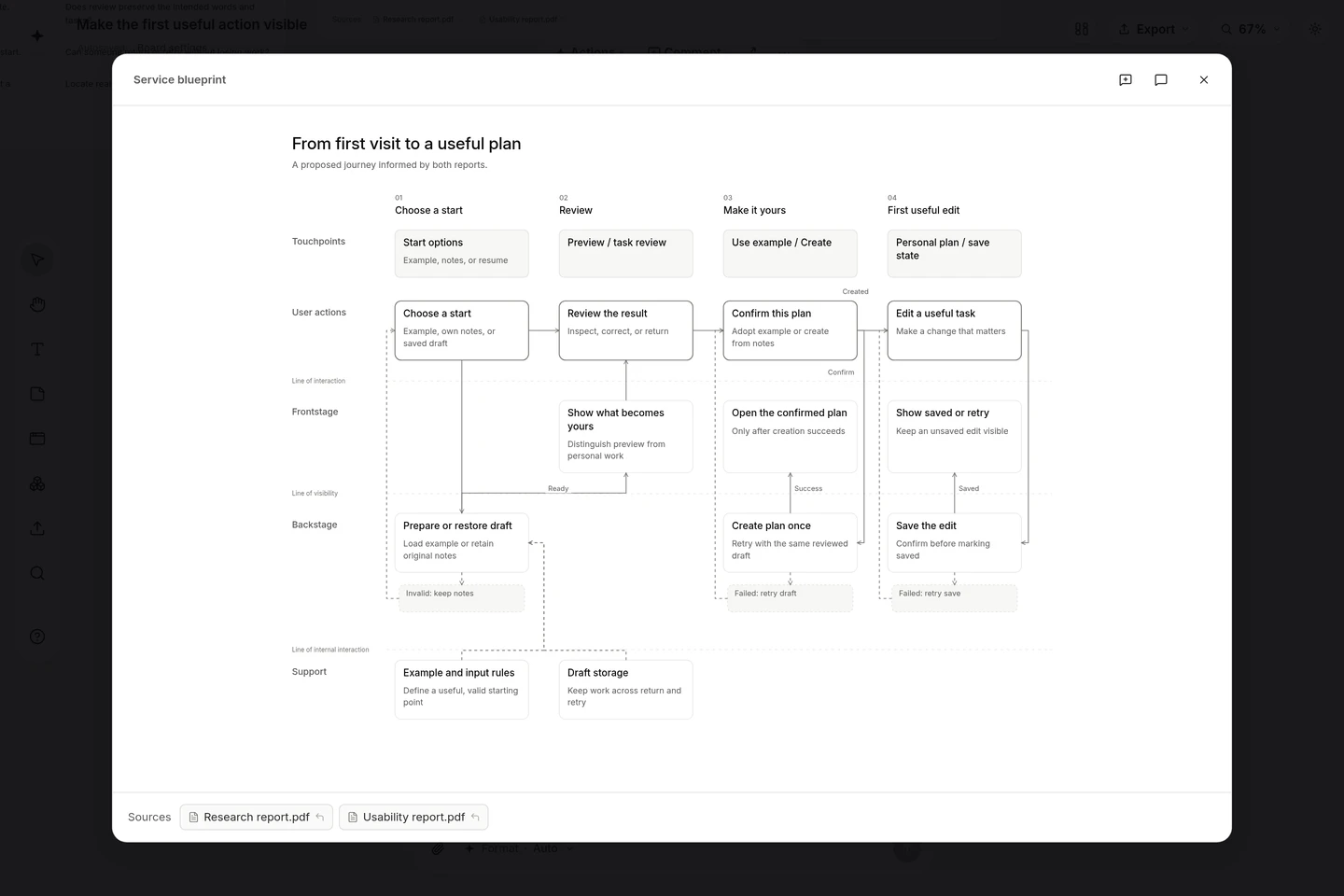
Two reports become research, comparisons and a service blueprint. The response is grounded in the attached material, with each format giving a different way into the problem.
Illustrative project: improving onboarding for a planning app. From reports to a useful first canvas.Inspect final screen ↗
View detail ↗Research becomes a document with findings, emphasis and a route back to the reports.View detail ↗A service blueprint makes the proposed journey and its recovery paths explicit.
02 / Build on it
Turn selected context into something you can try.
An existing screen and a journey map become the inputs for a working prototype. Selecting the material makes the scope of the next request explicit.
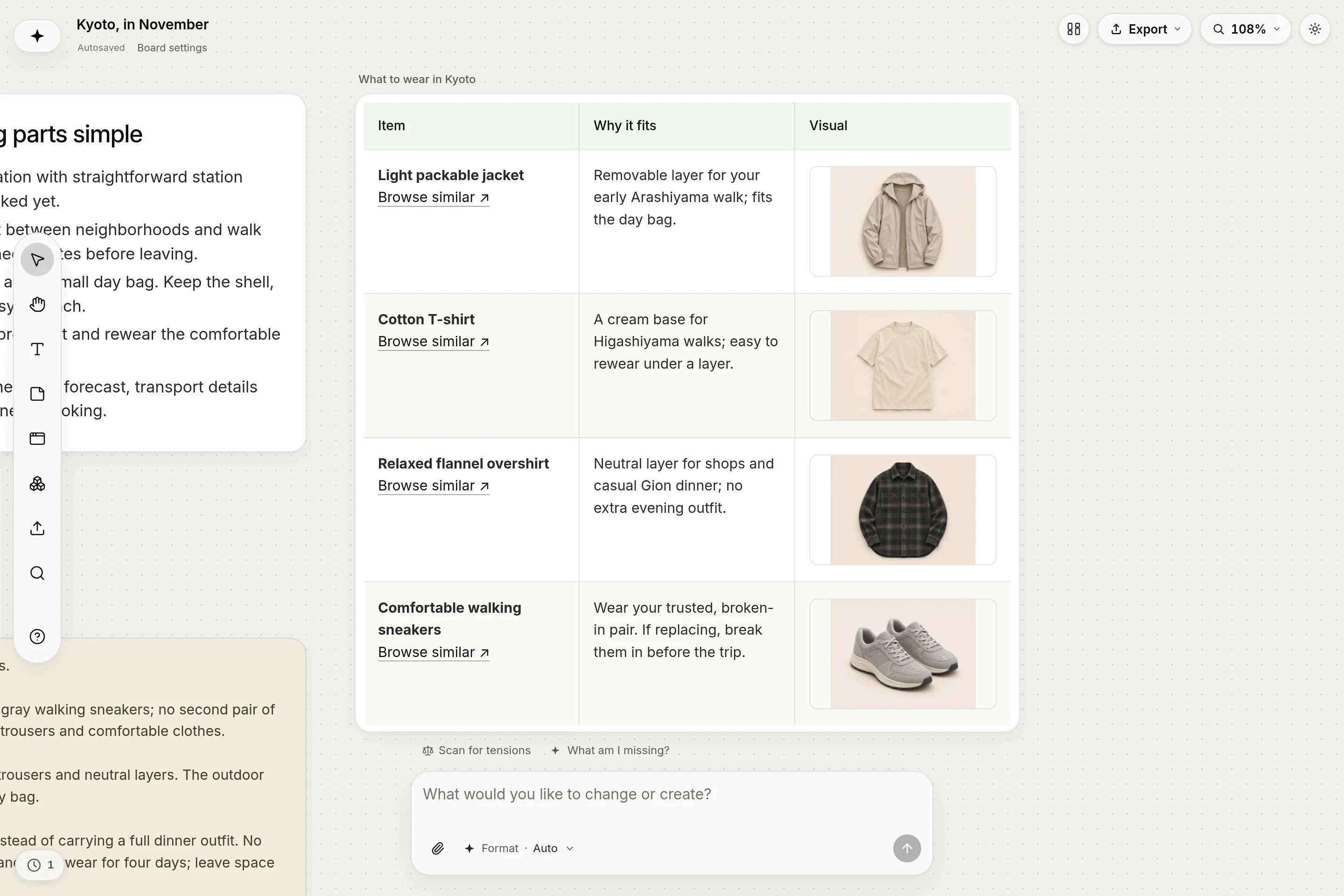
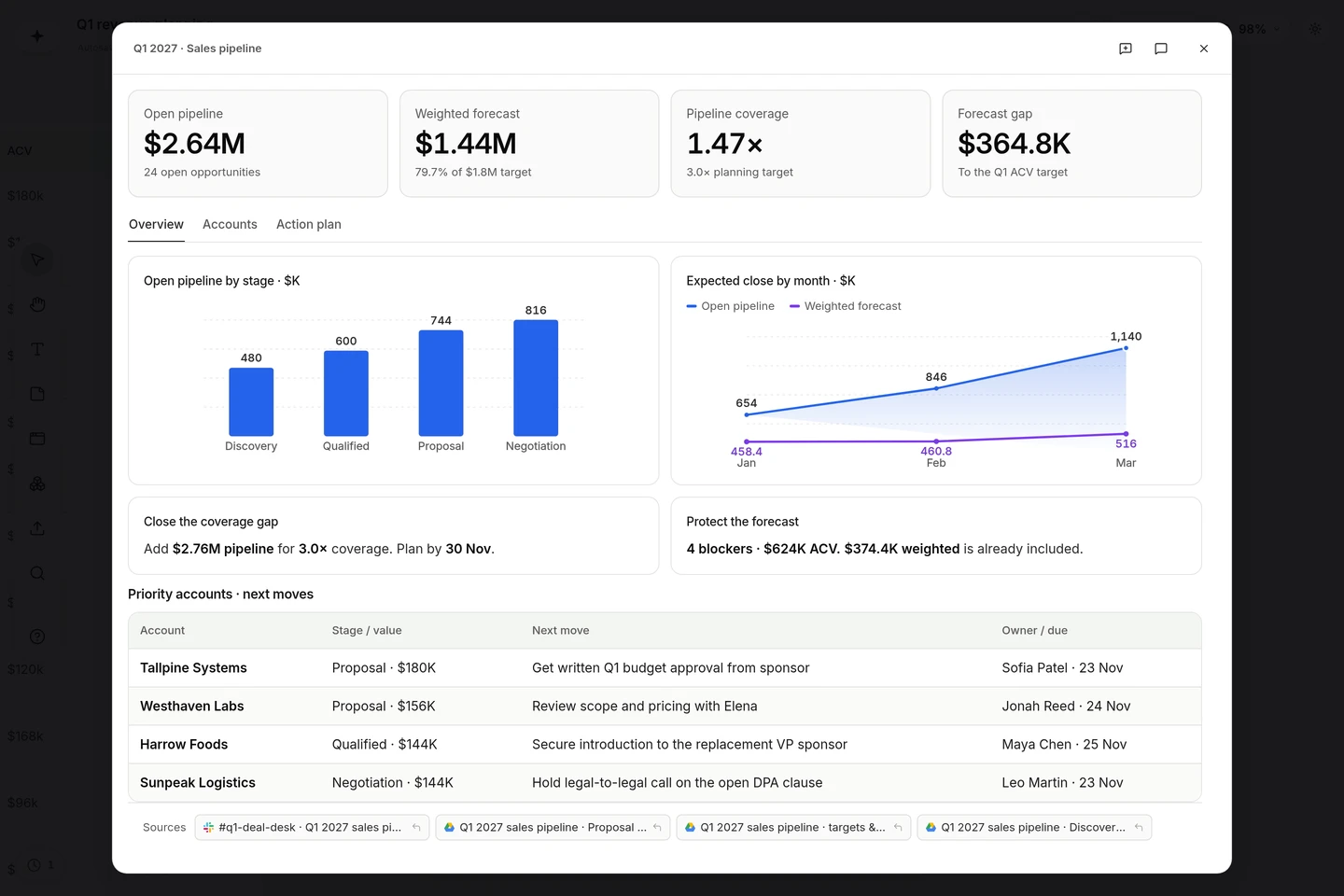
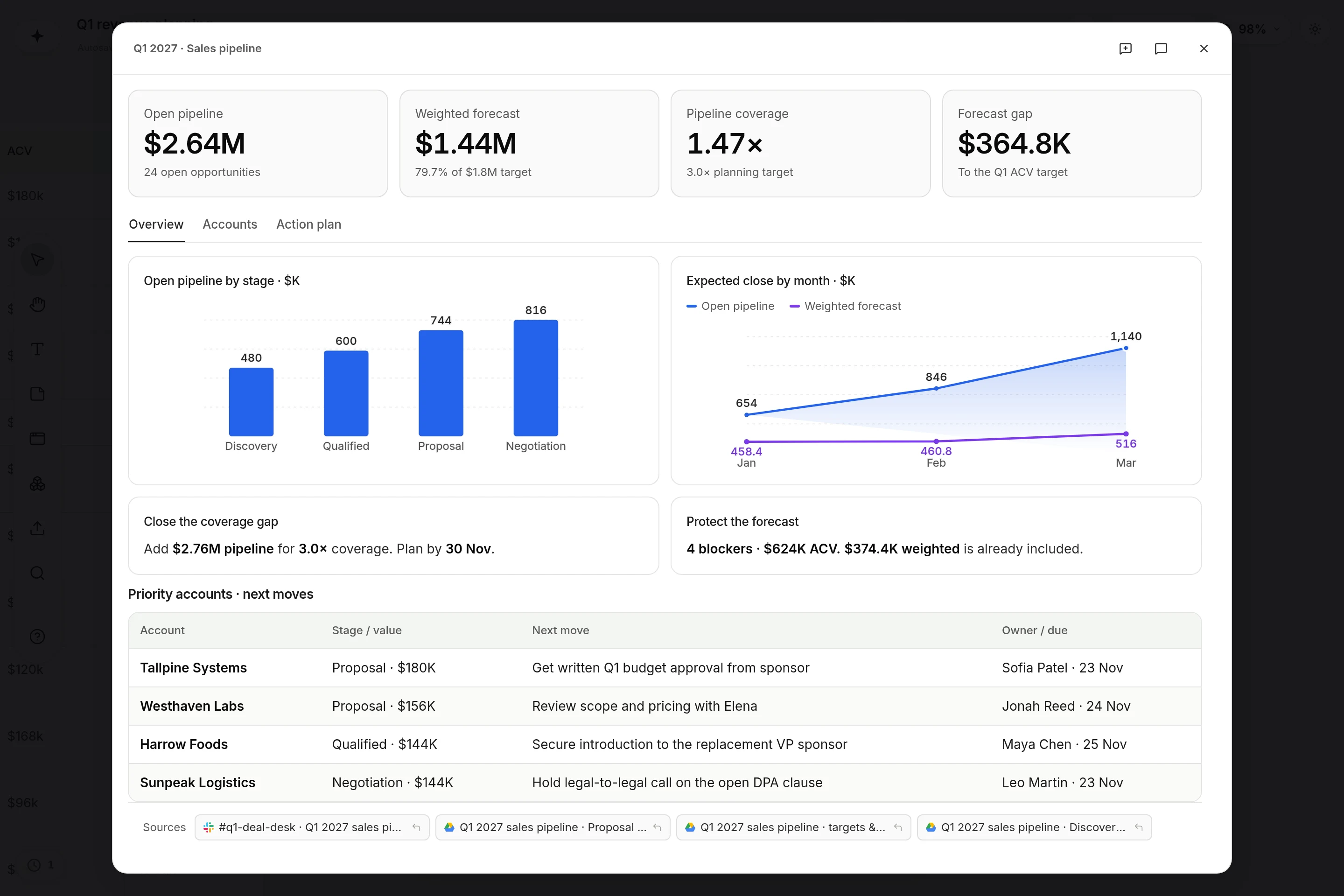
A travel plan becomes a visual packing comparison. A sales question becomes an explorable pipeline dashboard. The subject changes; context, sources and editable results stay familiar.
Business planning · Inspect the forecast, then work through the accounts.Inspect final screen ↗
Key design moments
The decisions that connected the system.
I worked between the individual interaction and the rules it created for the rest of the product. Four moments shaped that relationship.
01
Give the blank canvas a useful first step.
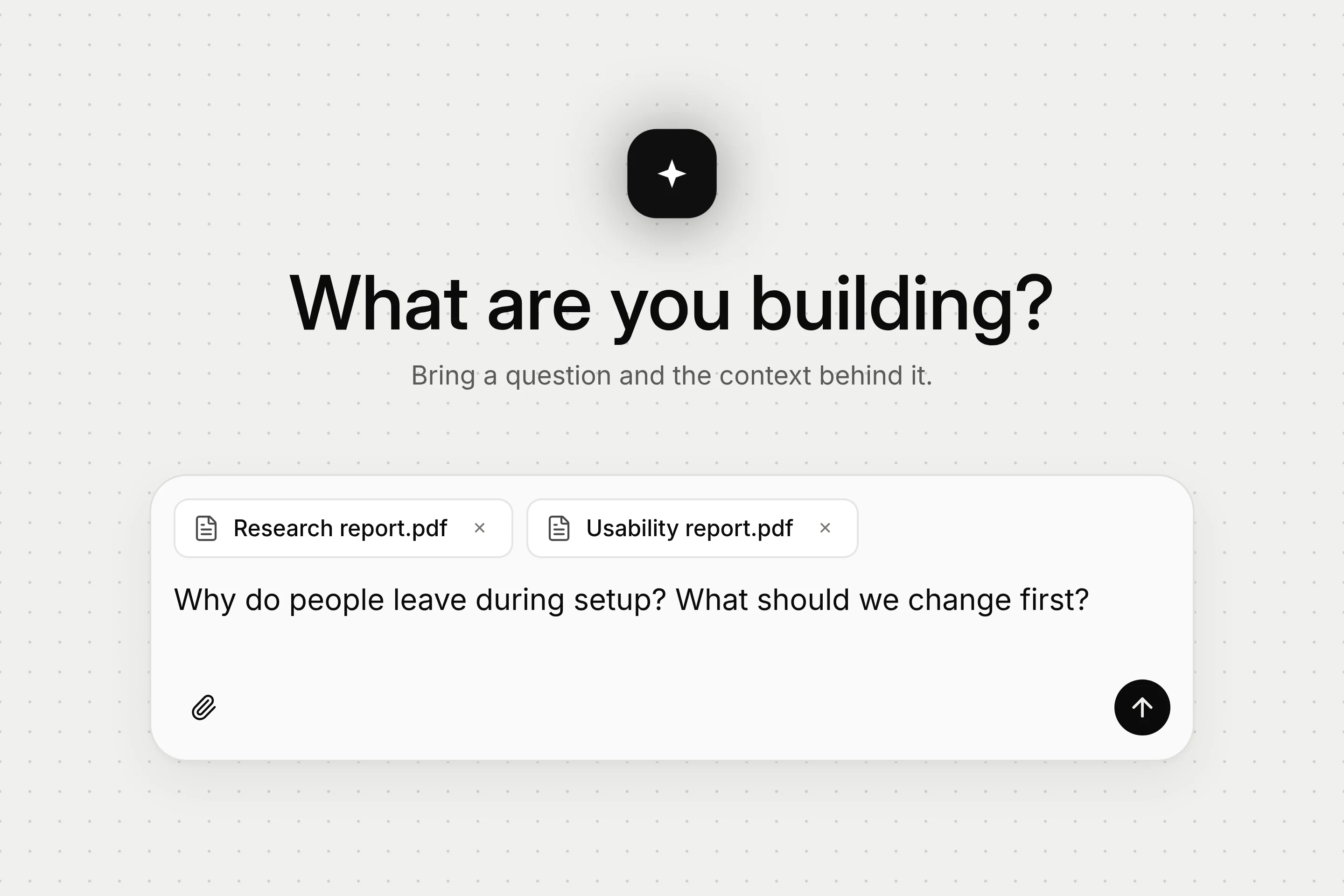
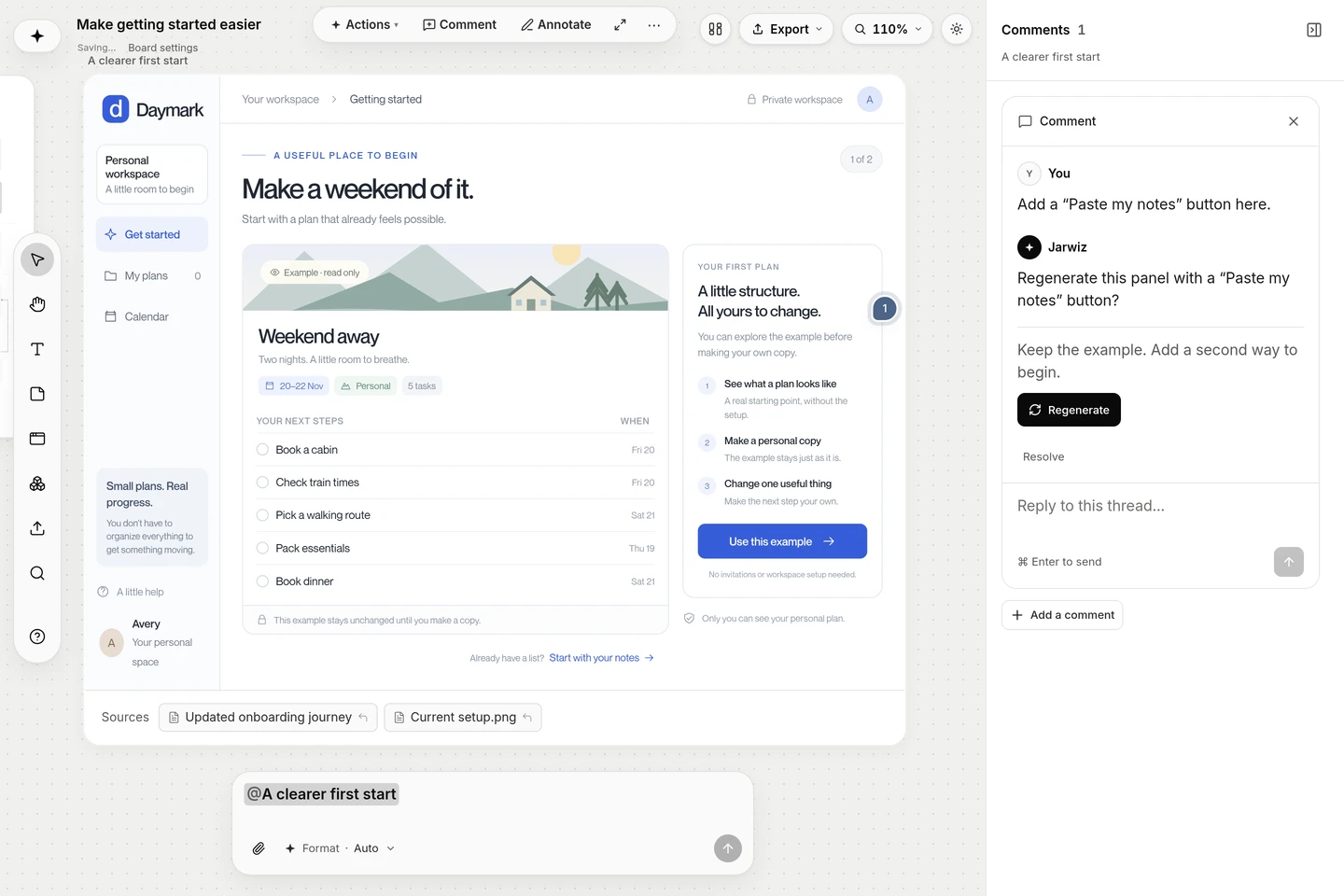
Feedback on the starting experience pointed to a basic problem: it wasn’t clear what to do first. The early onboarding flow asked people what brought them here before they had seen what Jarwiz could do.
I moved the question and attachments to the starting point. Recognizable file pills keep the input legible; the composer moves into the canvas as the response takes shape.
The system decision
Starting and continuing should use the same interaction.
A familiar entry pointA question, a few files and one clear action.
Continuity after the first answerThe same composer stays available as the workspace fills.
02
Different content. A shared grammar.
A document, an image table and a prototype need different interiors. Giving each its own surrounding controls would turn the canvas into a collection of unrelated tools.
I separated the shared frame from the content: a title, a useful body, sources and predictable ways to expand or discuss. Each format keeps the controls its task needs.
The system decision
Add new formats without asking people to relearn the workspace.
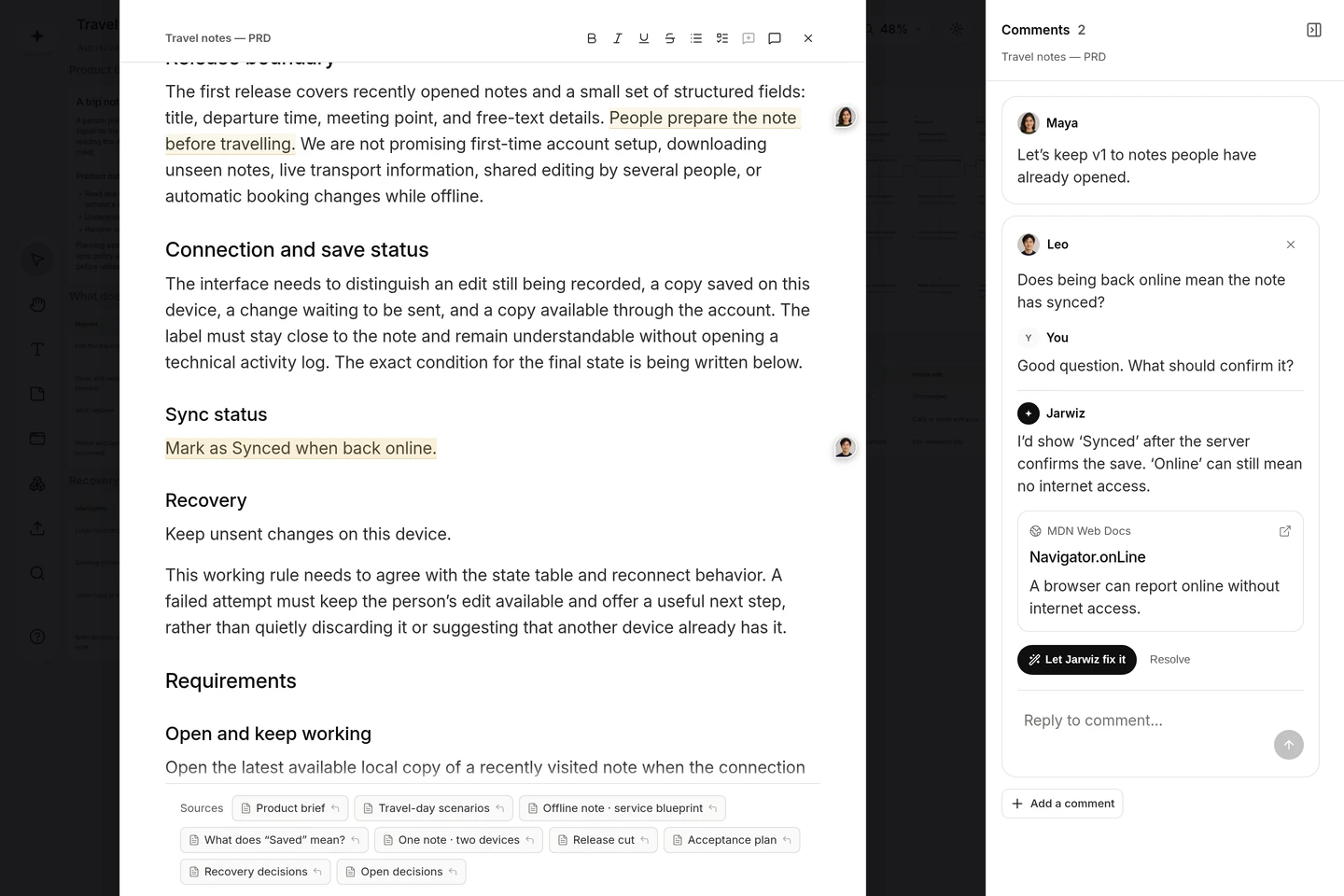
A helpful suggestion needs to point to the work it concerns. I brought discussion into one collapsible right-hand panel across card types, with room for people and Jarwiz to participate.
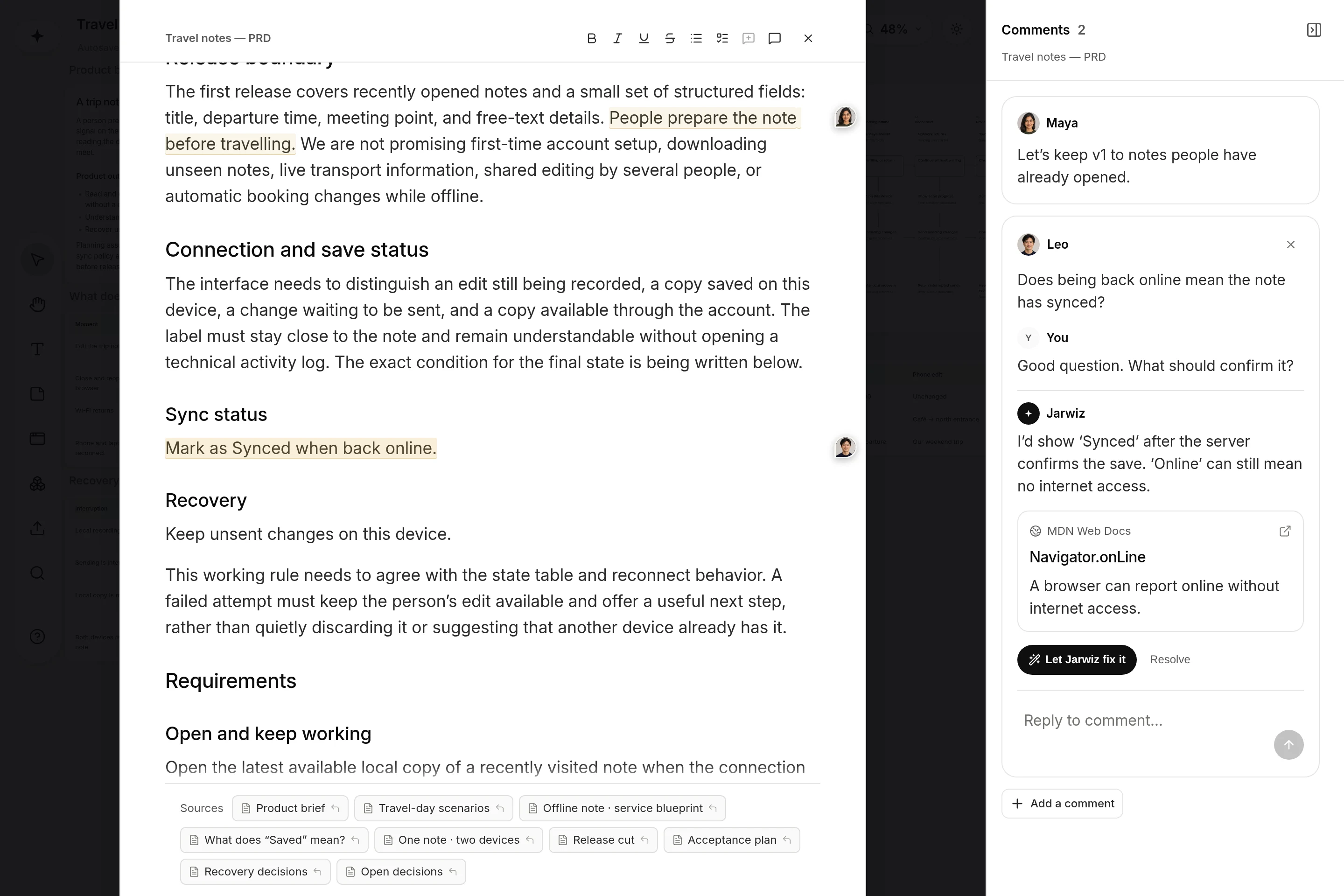
A recommendation carries its evidence. The person can reply, review a focused proposal and choose whether to apply it. Background assistance should not take control of the draft.
The system decision
Let AI contribute to the discussion. Keep the decision with the person.
One place for writing, discussion and a recommendation grounded in research.Inspect final screen ↗
From discussion to a deliberate change
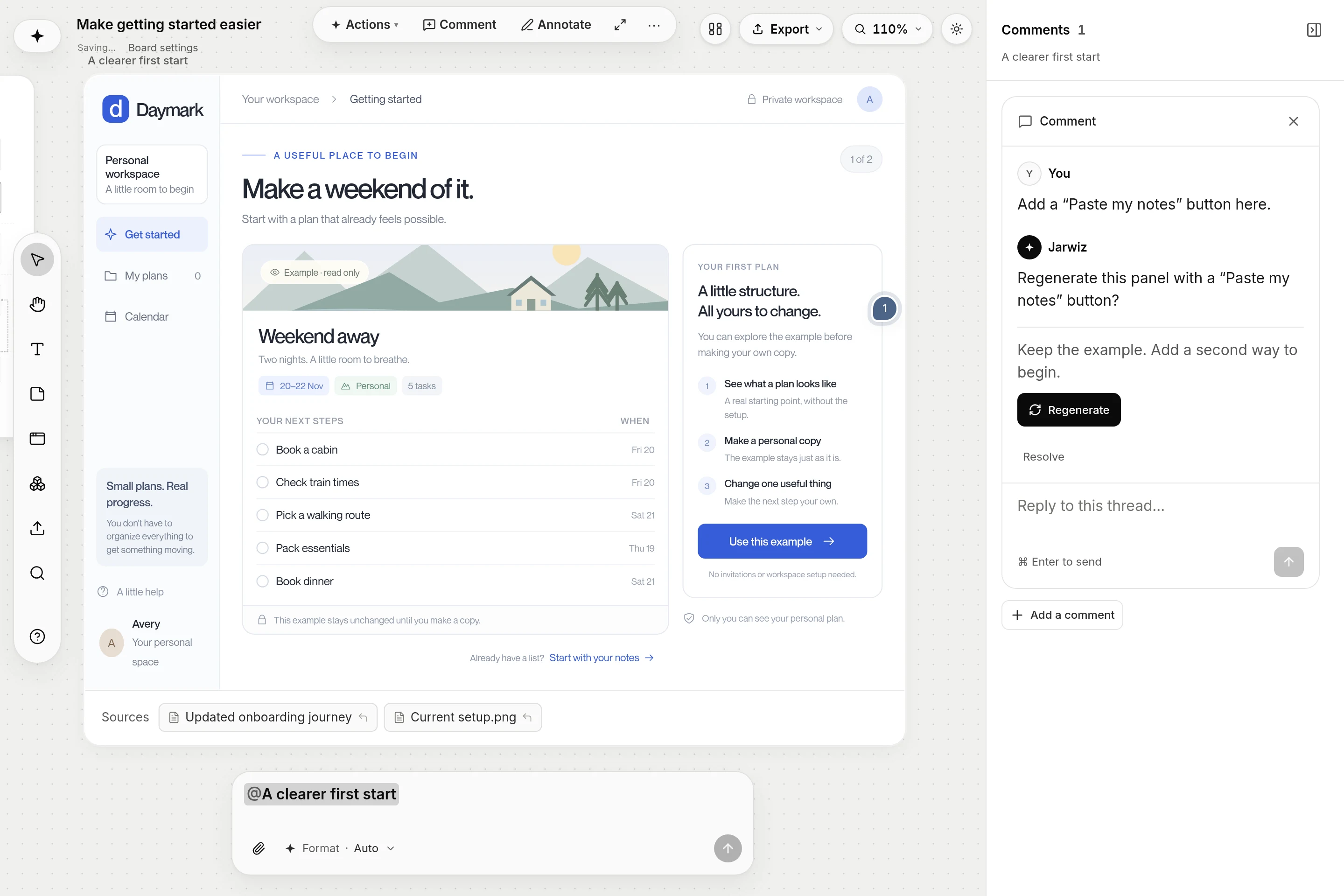
On a prototype, a comment becomes a scoped proposal. Approval updates the existing artifact, keeping the review connected to the result.
A source is useful beyond the first answer. It helps someone check a claim, understand a recommendation and decide what to revisit when the context changes.
I kept sources with the result and source management at the board level. For connected sources, I designed source refresh and draft revision as separate review decisions. Updating the evidence should not silently rewrite someone’s work.
The system decision
Traceability is a behavior, not just a citation style.
The outcome is an implemented workspace, with the interaction system carried into the product’s real components. The design work extended beyond the first generation to editing, source navigation, discussion and recovery.
A coherent product foundation
A common structure connects rich outputs, contextual requests and review. New formats have a place to fit into the system.
A clear next test
Jarwiz is preparing for closed beta. Adoption and time saved are not measured yet. The next question is whether people can return to their own work and confidently continue it.
Reflections
Design the relationships. Then design the screens.
01
The interface is a set of promises.
A source promises a way back to evidence. A comment promises a stable place in the work. An editable result promises that a person’s changes will survive the next action. I learned to design those behaviors together.
02
Flexibility needs a few dependable rules.
The canvas can hold many kinds of work, but people still need to know where to start, what context is in play and who decides what changes. Consistency at those boundaries creates room for variety inside them.
03
The real test is the return visit.
The first response demonstrates possibility. I want to learn what happens when someone returns with new evidence, revises an earlier decision and carries the work forward. That is the next research question.
✦
A workspace built to keep evolving.
Jarwiz is being built as an open, model-agnostic workspace. The work should remain useful as the models behind it change.